Crease Report — College Lacrosse News
How Lacrosse Scholarships Work: D1, D2, and D3 Explained
Athletic scholarships in lacrosse are more complicated than a full ride or nothing. Here is exactly how scholarship money works across all three divisions.
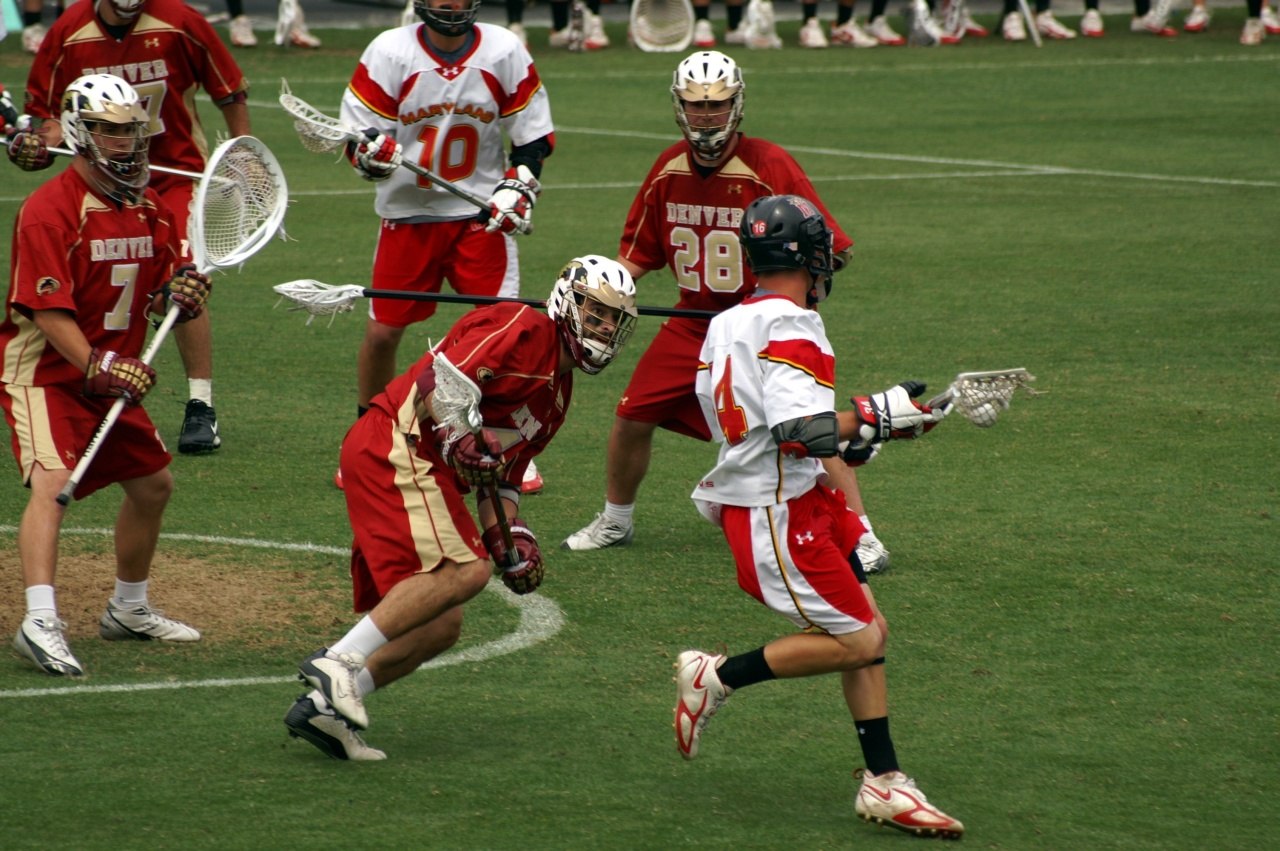
The word "scholarship" gets thrown around in lacrosse recruiting conversations like it has a single meaning. It doesn't. Scholarship rules, amounts, and availability differ significantly by division — and misunderstanding the system leads families to either aim too low or chase money that doesn't exist the way they think it does.
Division I: Equivalency Sport, Not Head Count
Men's D1 lacrosse is an equivalency sport. That means programs receive a set number of scholarship equivalencies — not a set number of scholarship players. Starting in the 2025–26 school year, D1 men's programs can have up to 48 scholarship equivalencies. What this means in practice: a coach can take that pool of scholarship money and distribute it across as many players as they choose. One player might get 80% of a scholarship. Another gets 20%. Very few programs hand out flat full rides to 48 players — that would be prohibitively expensive.
Women's D1 lacrosse works the same way, with 12 scholarship equivalencies per program. That number sounds small because it is. Women's lacrosse is classified differently from men's under Title IX accounting, which is why the equivalency number differs so drastically.
What a "Full Scholarship" Actually Covers
A full athletic scholarship covers tuition, room and board, fees, and course-related books. At a school where that totals $80,000 per year, a 50% scholarship is $40,000. That's real money — but it's also only half the bill, and families need to understand they may need loans, work-study, or academic aid to cover the rest.
At public schools, in-state vs. out-of-state tuition can make a partial scholarship feel very different. A 40% scholarship at an in-state school might cost you less out of pocket than a 60% scholarship at a high-cost private school.
Division II: Partial Scholarships Are Standard
D2 men's lacrosse programs can offer up to 10.8 scholarship equivalencies. D2 women's programs can offer up to 9.9 equivalencies. This means essentially every scholarship at the D2 level is partial. A player accepting a D2 offer should expect something in the range of a quarter to half of their costs covered athletically, with academic aid potentially supplementing.
D2 lacrosse is often overlooked by families fixated on D1. The level of play is genuinely competitive, the academic experience can be excellent, and the total cost of attendance after aid may be lower than a D1 partial offer at an expensive school.
Division III: No Athletic Scholarships, But Read the Fine Print
NCAA rules prohibit D3 schools from awarding athletic scholarships. What they can do is award substantial academic and need-based aid — and many D3 schools are well-endowed institutions that are very generous with it. Roughly 82% of D3 athletes receive some form of financial assistance. At schools like Amherst, Williams, or Tufts, a student who qualifies for financial aid might receive a package that rivals or exceeds what a D1 partial offer would net after accounting for the higher sticker price at most D1 programs.
The catch: a D3 coach cannot promise you financial aid. They can tell admissions they want you, and admissions can factor that in, but the financial aid office operates independently. You need to be admitted on your own merit, and your aid package depends on your family's financial situation and the school's aid policy.
How to Compare Offers
When you have multiple offers on the table, compare net cost, not scholarship percentage. Build a simple spreadsheet: total cost of attendance minus athletic scholarship minus expected academic/need-based aid equals your out-of-pocket number. Do this for every school you're seriously considering. A 30% offer at a school with strong academic merit money might cost less than a 60% offer at a more expensive school.
Can Scholarship Offers Be Rescinded?
Yes. Verbal offers are not binding until you sign a National Letter of Intent. Schools can and do reduce scholarship amounts — particularly if a player underperforms or if a coaching staff changes. Multi-year scholarship guarantees are more common at wealthier programs but are not universal. Ask explicitly: is this scholarship renewed annually at the coach's discretion, or is it guaranteed for four years?
Don't rank schools by scholarship percentage. Rank them by net annual cost, program fit, and academic strength. A D3 school with strong aid and the right culture can be a better four-year investment than chasing a D1 partial that costs more out of pocket.